When garage door sensors are out of alignment, the door won't close. It starts down, reverses, and the opener light flashes. The fix is usually simple: loosen the sensor bracket, move the sensor until its light goes solid, then tighten it. If the light won't go solid, look for a bad wire or a failed sensor.
Why sensors go out of alignment
- A car, bike or trash can bumped a sensor.
- Daily vibration loosened the bracket.
- Dust or cobwebs cover a lens.
- A wire is frayed, cut or pulled off its terminal.
- The sensor failed and its light won't come on.
- Afternoon sun is shining into the receiving sensor.
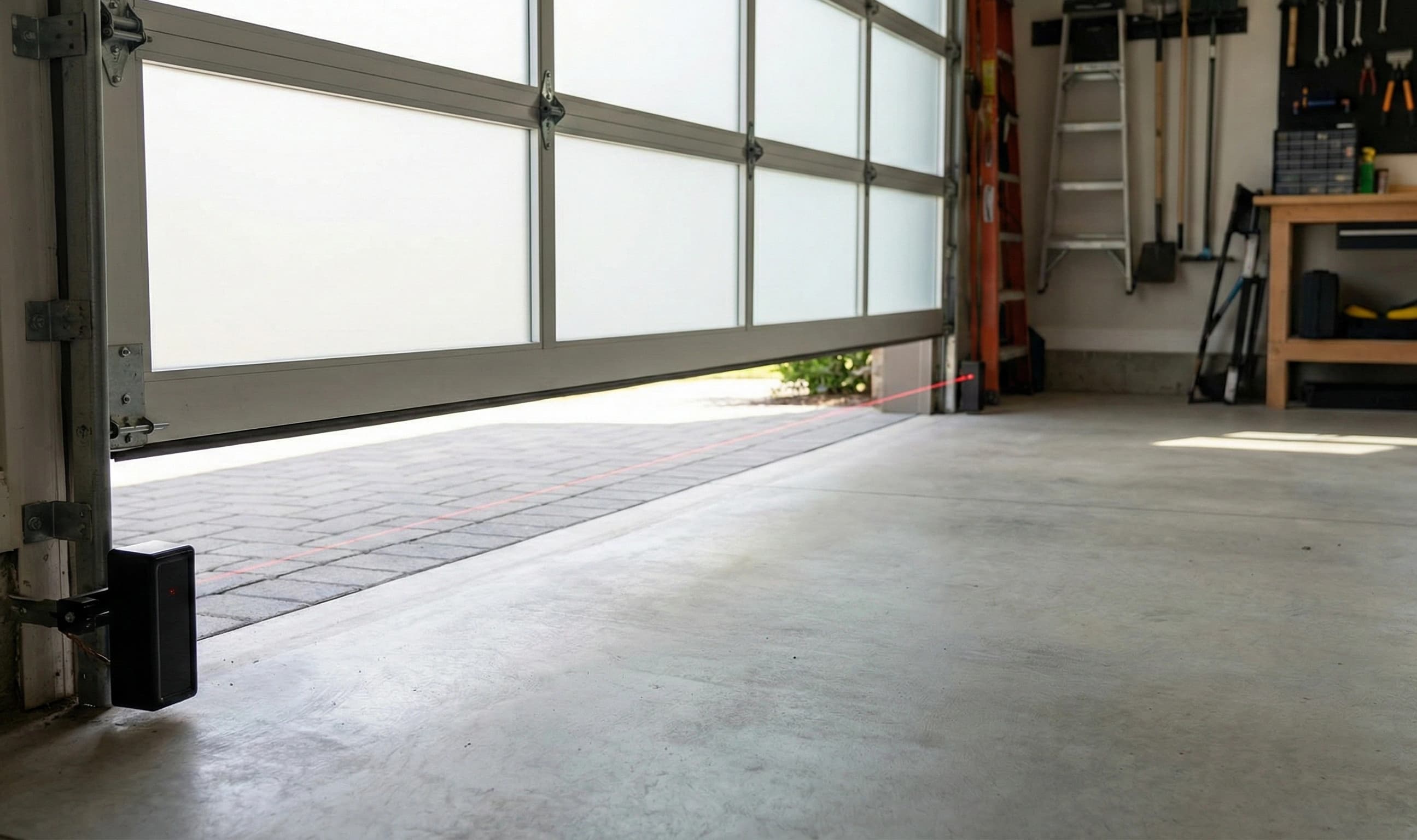
The sensors are the two small boxes at the bottom of your door tracks, no more than about six inches off the floor. One sends an infrared beam across the opening and the other receives it. If anything breaks the beam while the door is closing, the opener reverses the door. When a sensor is bumped or bad, the opener acts like something is always in the way, so the door won't close from the remote or wall button.
How garage door safety sensors work
Openers built since 1993 are required to have these photo-eyes. The indicator lights tell you which sensor is which.
On LiftMaster, Chamberlain and Craftsman openers:
- The sending sensor has an amber light. It stays on whenever the sensor has power, aligned or not.
- The receiving sensor has a green light. It's solid when it sees the beam and goes off, dim or flickers when it doesn't.
- Both lights steady means the sensors are lined up and the door should close.
- An amber light that's off means the sending sensor isn't getting power, which points to wiring rather than alignment.
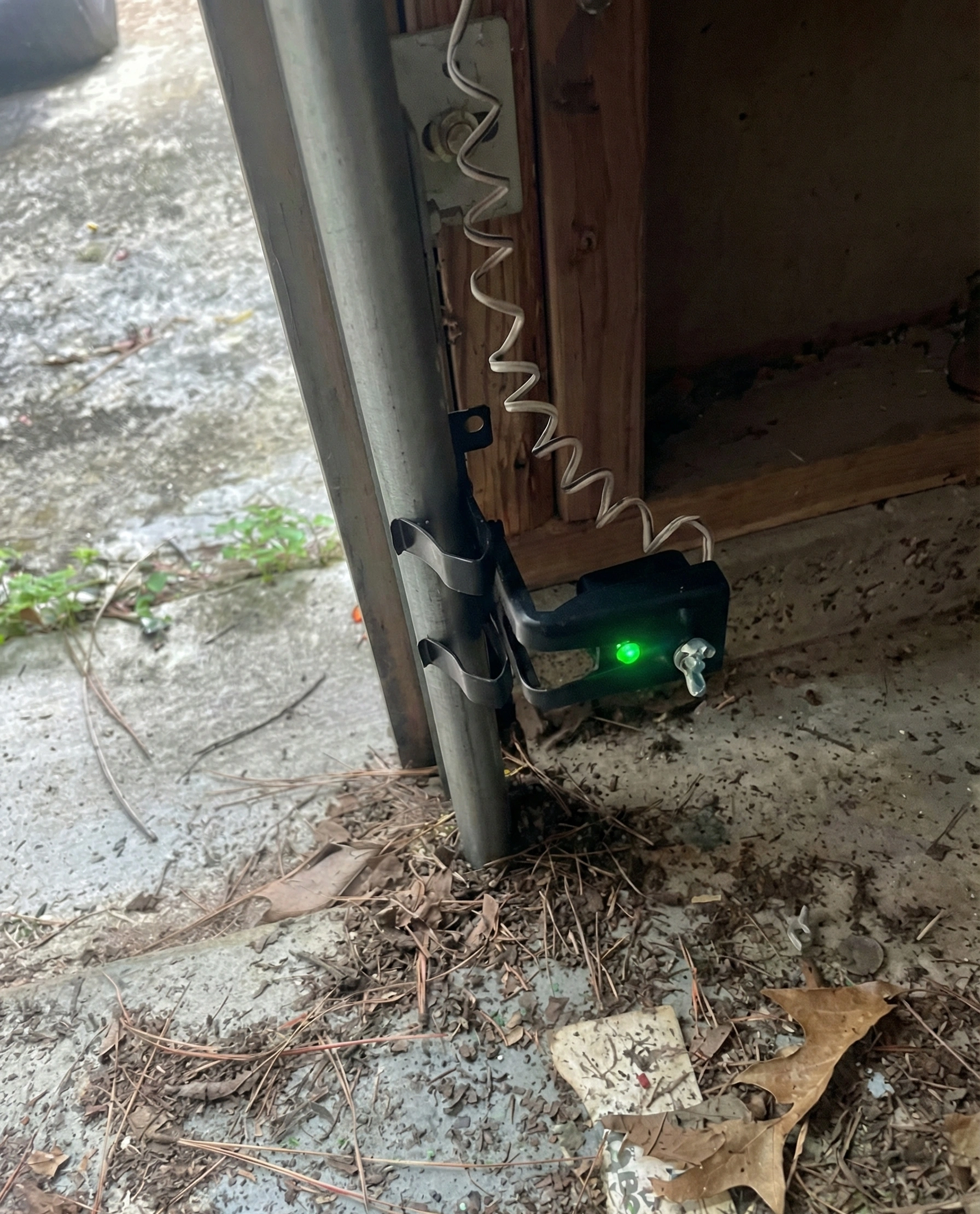
Other brands, like Genie, use different colors. To tell them apart, block the beam with your hand. The light that changes is on the receiving sensor, and that's the one to watch while you align. Most sensors are held to their brackets with a wing nut or small bolt.
Steps to align garage door sensors
Grab a soft cloth and a tape measure. Plan on about 10 minutes.
- Check that the wires going into both sensors are attached and not cut or pinched.
- Wipe both lenses with a soft, dry cloth to clear dust and cobwebs.
- Look over the sensor housings for cracks or a bent bracket.
- Move anything sitting in the doorway between the sensors.
- Measure each sensor from the floor. They should sit at the same height and face each other straight across the opening.
- Loosen the wing nut or bracket screw on the sensor that's out of line. Don't take it all the way off.
- Move the sensor slowly up, down or side to side while you watch the receiving sensor's light.
- When the light goes solid, hold the sensor still and tighten the bracket. Check that the light is still solid after it's tight, since the sensor can shift as you snug it down.
- Run the door down and up a few times. Then, with the door closing, pass a broom handle or a box through the beam. The door should stop and reverse. Never use your hand, foot or a pet to test it.
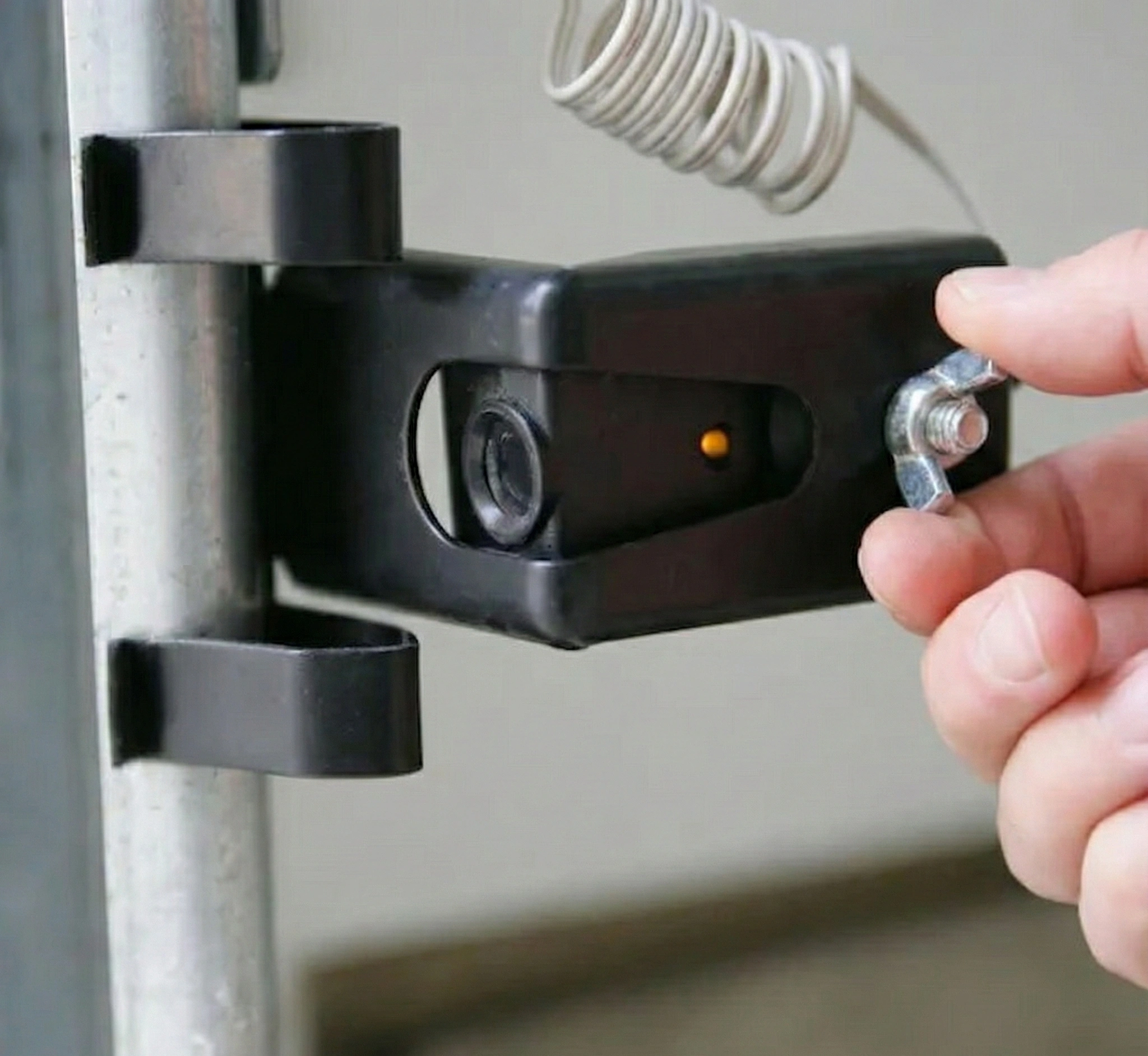
If you can't tell which sensor moved, adjust the receiving sensor first and watch its light. If the sending sensor's light is off entirely, stop adjusting and check its wiring. No amount of aiming fixes a sensor with no power.
Problems that look like alignment issues
If you've lined the sensors up and the door still won't close, the cause may be something else, and you may need garage door repair.
Wiring problems
The thin sensor wires run up the wall to the opener. Staples pinch them, rodents chew them and they pull loose at the opener terminals. Follow each wire from sensor to opener and look for bare spots or loose connections.
Sun glare
Direct sunlight can blind the receiving sensor, usually in the afternoon when the sun lines up with the opening. A small shade over the receiver often fixes it. Some techs swap the sensors to opposite sides so the receiver faces away from the sun.
Moisture and corrosion
Houston's humidity, and the salt air closer to the coast, corrode the small wire terminals. If the connections on the sensors or at the opener look green or crusty, that's likely the problem. A garage door maintenance tune-up includes a photo-eye test and a look at these connections.
When to call a professional
Signs you need help
- The receiving light won't go solid no matter how you adjust it.
- One or both sensor lights won't come on at all.
- The wires are badly damaged or the terminals are corroded.
- The door still won't close even though both lights are solid.
If both lights are solid and the door still reverses, the problem may be in the garage door opener itself, such as the logic board or the force and travel settings, and it needs a proper diagnosis.
If your sensors won't hold a solid light after cleaning and realigning, give us a call at (713) 324-8950. We'll test the wiring from the sensors to the opener, replace a failed sensor if that's what it is, and check that the door reverses the way it should before we leave. Minor opener repair visits like this start around $85. If you'd rather get the whole door looked at, book a garage door health check.
Frequently Asked Questions
Why is one sensor light green and one amber?
On LiftMaster and Chamberlain openers, amber is the sending sensor and stays on whenever it has power. Green is the receiving sensor and only stays solid when it sees the beam. Other brands use other colors, but the idea is the same.
Can I bypass my garage door sensors?
On many openers you can close the door by pressing and holding the wall button until the door is all the way down. Watch the door the whole time and keep people, pets and cars out of the way. Don't disconnect or jumper the sensors permanently. They're the safety feature that keeps a closing door from landing on someone.
How often do garage door sensors go bad?
Not often. Most sensor problems are alignment, a dirty lens or wiring. Sensors fail sooner when they get hit a lot or sit in water, and a dead one usually shows no light at all.
Do both sensor lights need to be on?
Yes. Both lights should be steady when the sensors are aligned and powered. If either light is off or blinking, the opener sees the safety circuit as broken and won't close the door normally.
Why do my sensors keep going out of alignment?
Usually the bracket is loose or the sensors keep getting bumped. Tighten the bracket fully, replace a bent one and move whatever keeps hitting the sensor.
Will any replacement sensor work with my opener?
Not always. Sensors from the same brand as your opener are the safest bet. Universal sensors fit many openers, but compatibility varies, so check your opener's model number against the sensor's list before you buy.