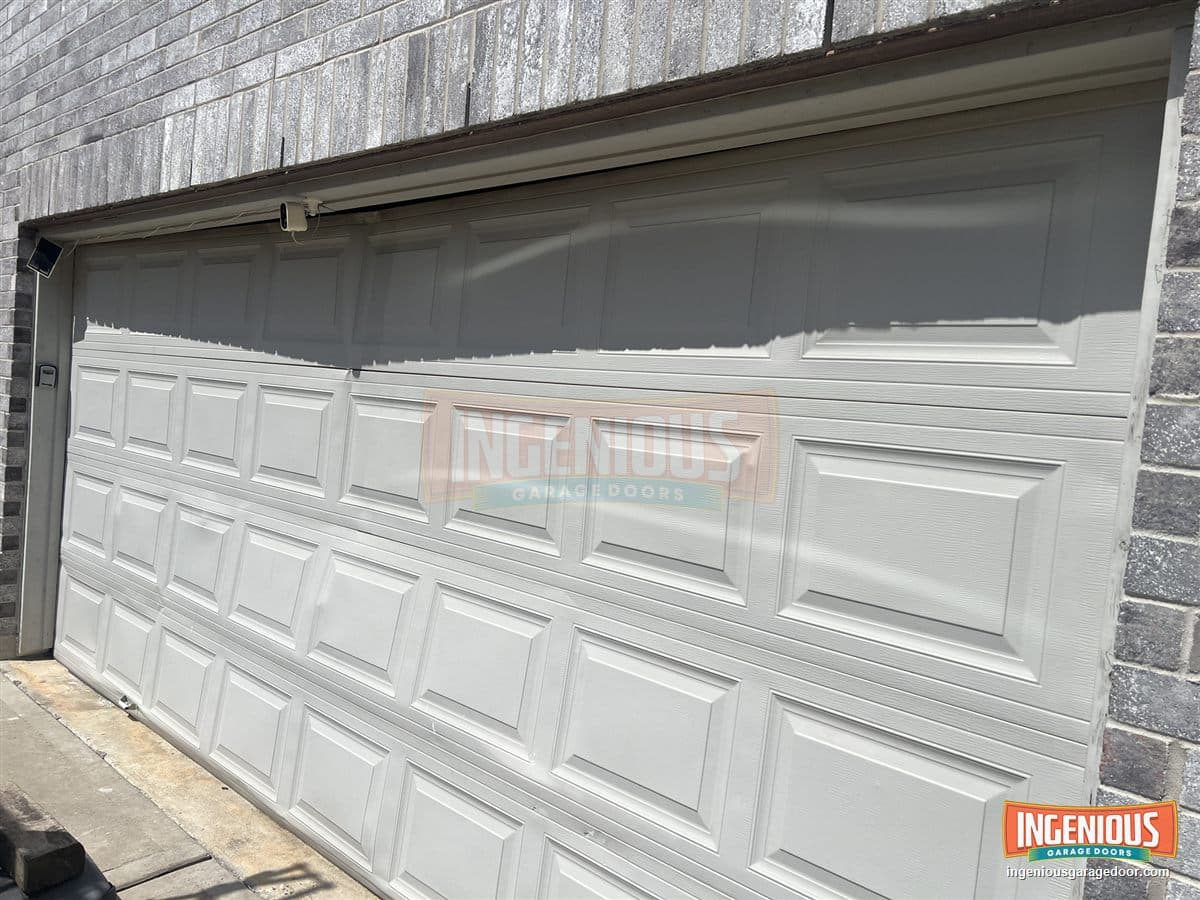
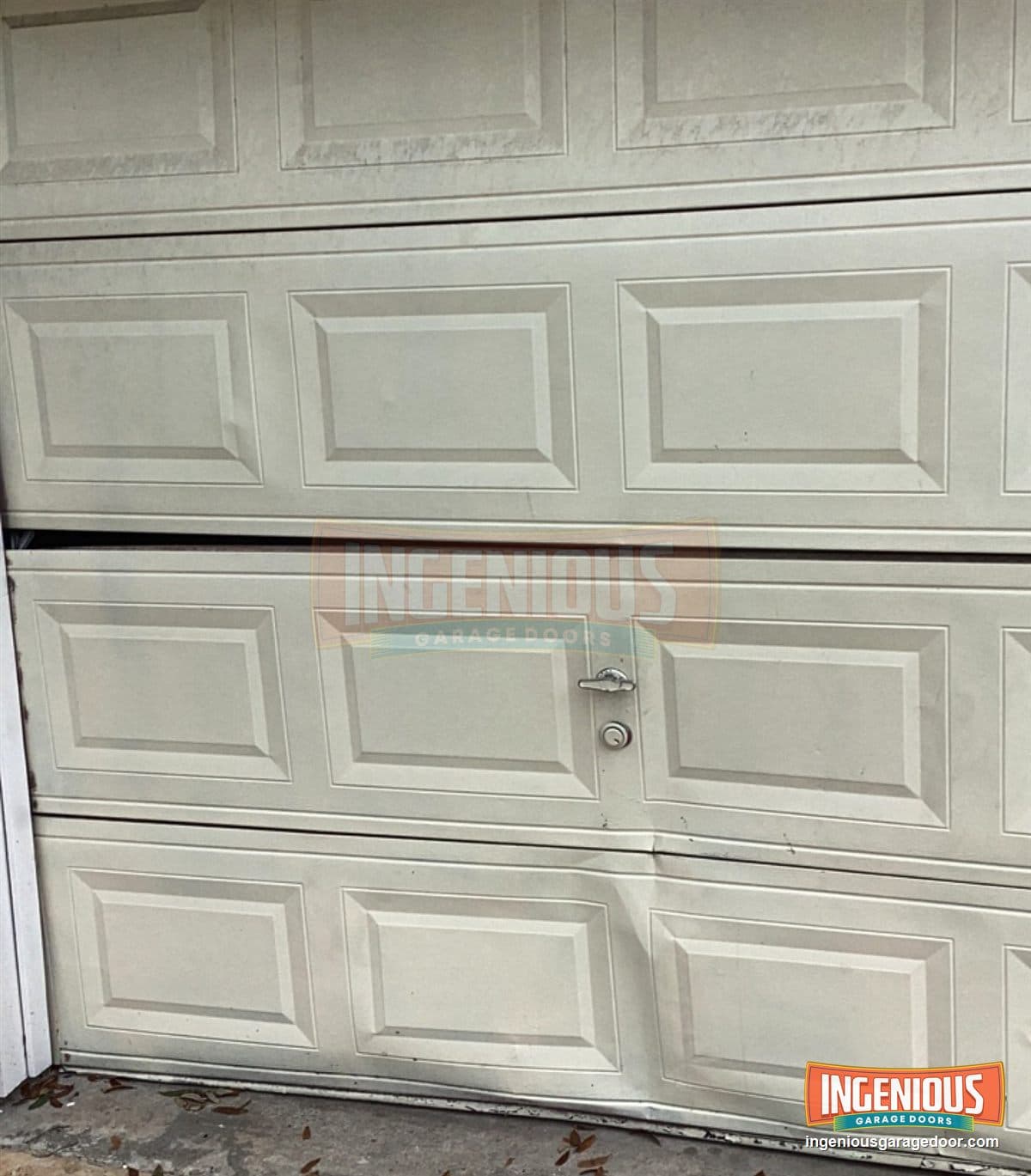
The request came in one evening in February. The garage door "looks like someone had hit it," and you could see daylight through it. It had been fine all day. A car was stuck inside.
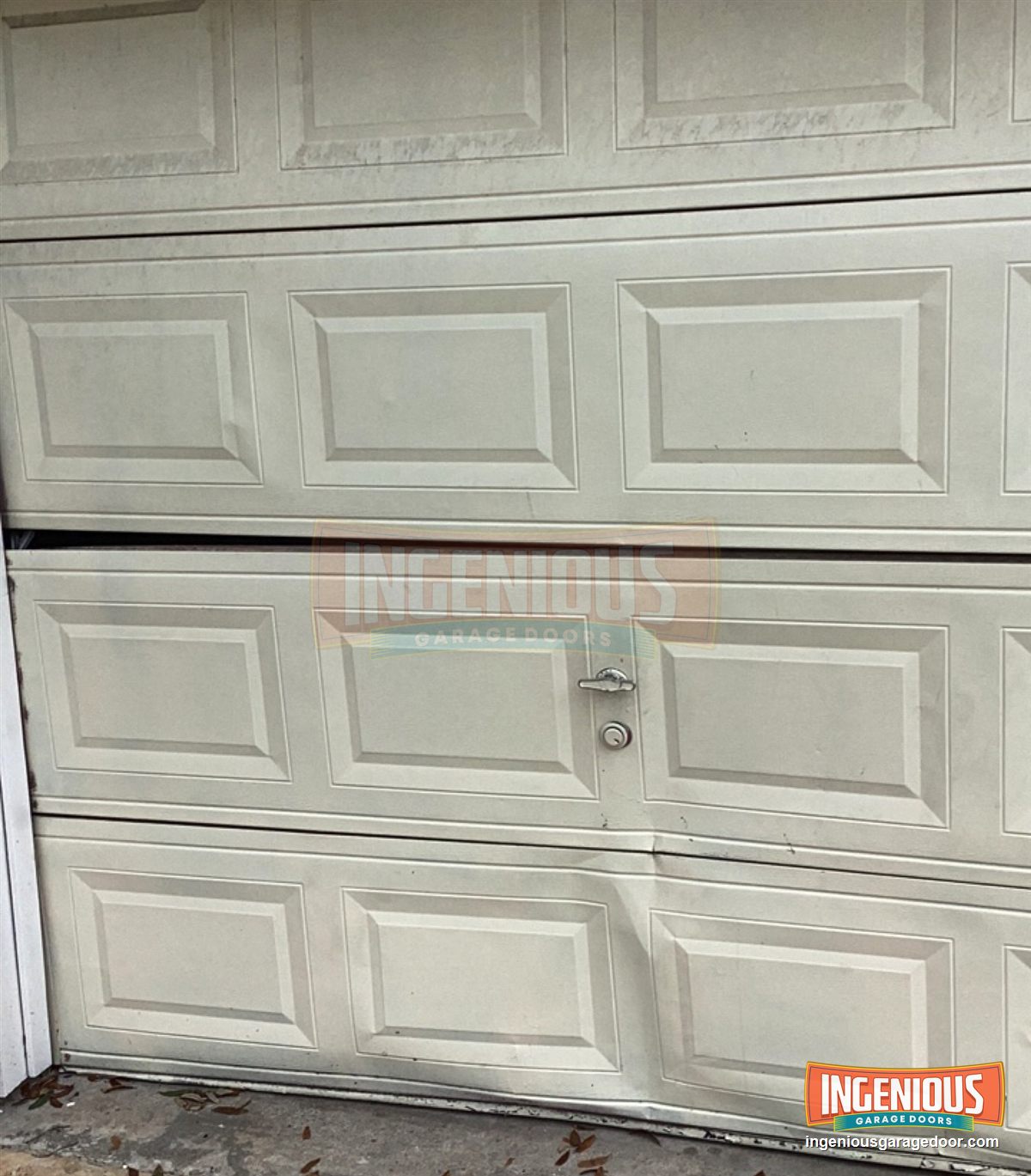
Nobody hit it
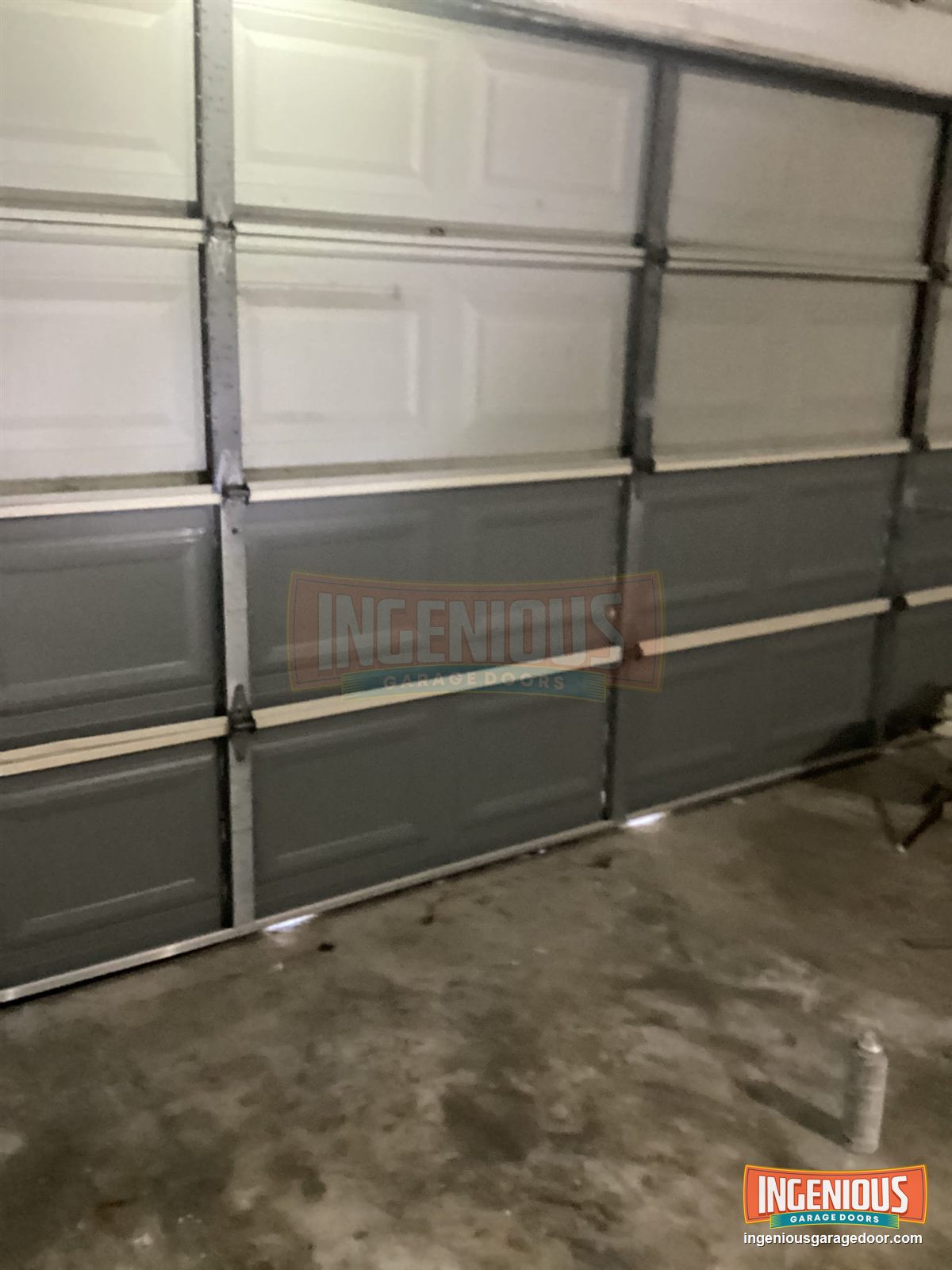
Steve looked it over and wrote up what he found. This door had no opener. It was lifted by hand every time. Here is what his notes said:
- The springs were no longer holding tension, so the door was much heavier to lift than it should be.
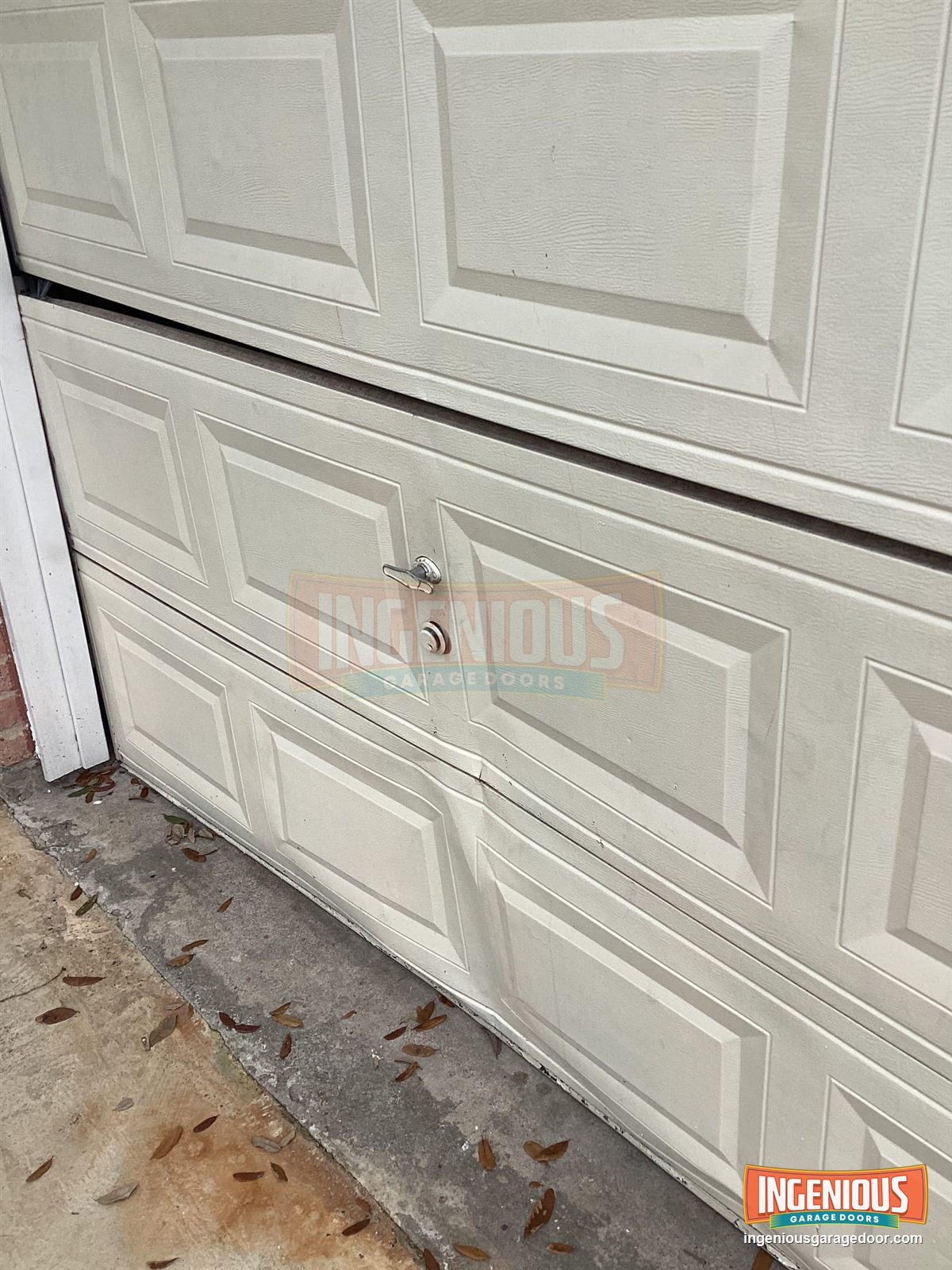
- The bottom two sections had buckled from cracking over time, and there were holes all along the seams.
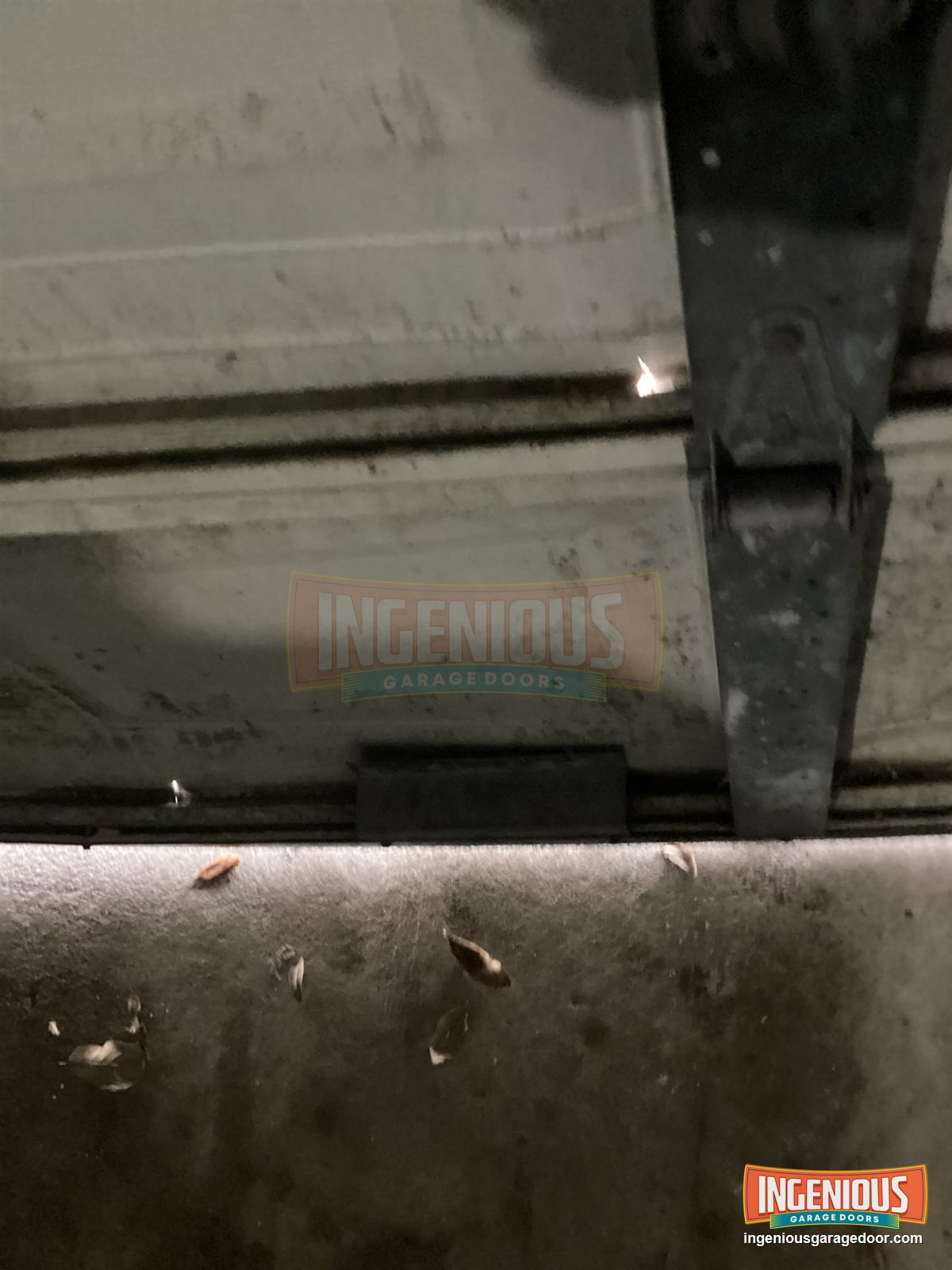
- The rollers were old and jamming in the track.
- The lock was broken, so there was no way to lock the garage.
What worn springs do to a manual door
On a healthy door the springs carry almost all of the weight. Lift it by the handle and it feels light, and it stays put when you let go halfway.
When springs lose tension, the weight comes back to you. On a door without an opener, people grab the bottom section and heave, every day. All of that force goes into the bottom two sections and the hinges along their seams. Steel that thin does not fail all at once. It cracks a little at a time along the seams until one day it folds, and then it looks like a car backed into it.
If your door feels heavy, or it slides back down when you let go halfway, the springs are worn. Replacing them costs far less than replacing the sections they ruin.
Why two sections and not a whole door
The top two sections on this door were in good shape. Only the bottom two had cracked, because that is where the lifting force went. So this was a repair, not a replacement. That is different from the Cypress door a broken spring folded, where all four sections were damaged and a new door made more sense.
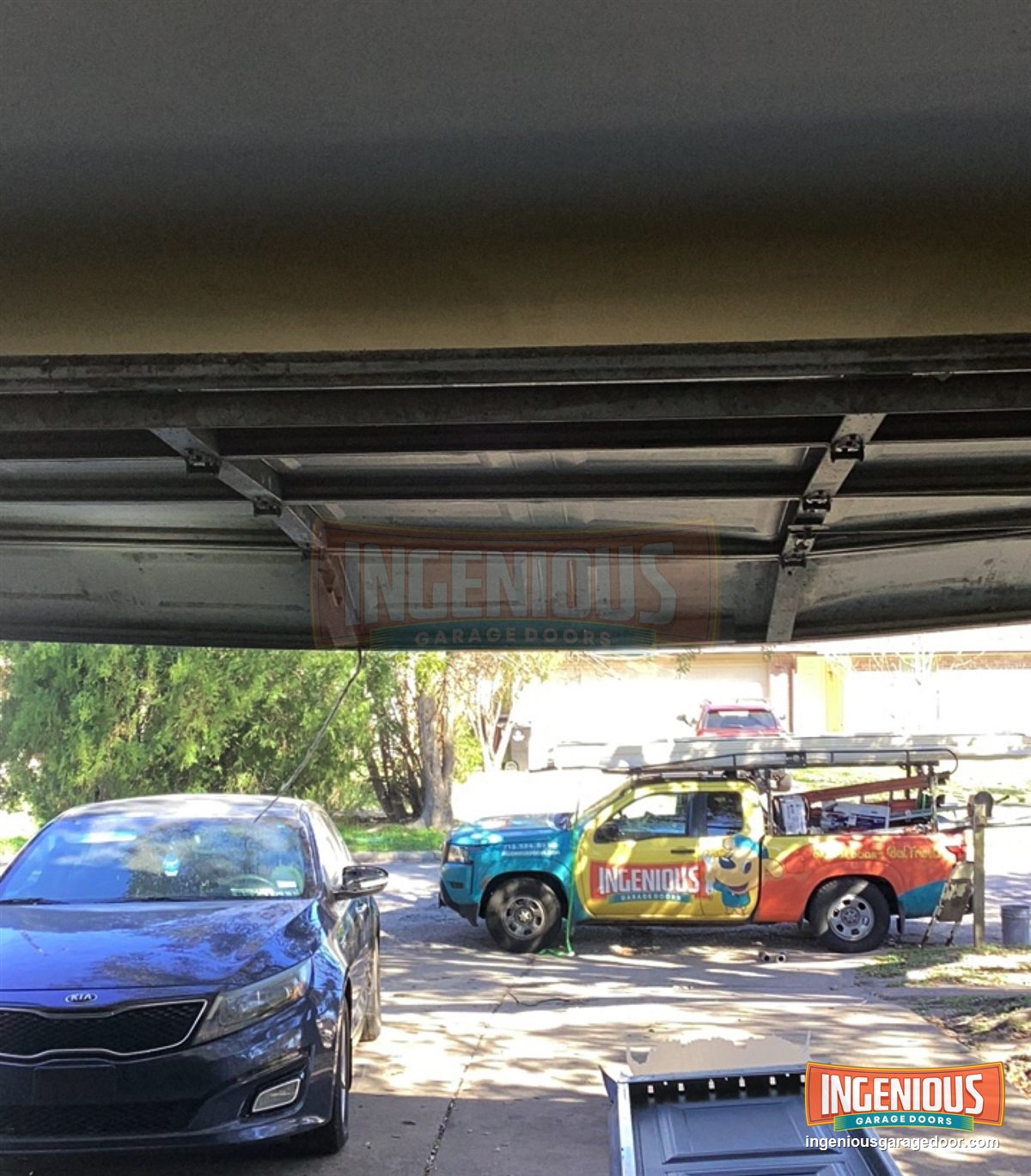
Steve installed:
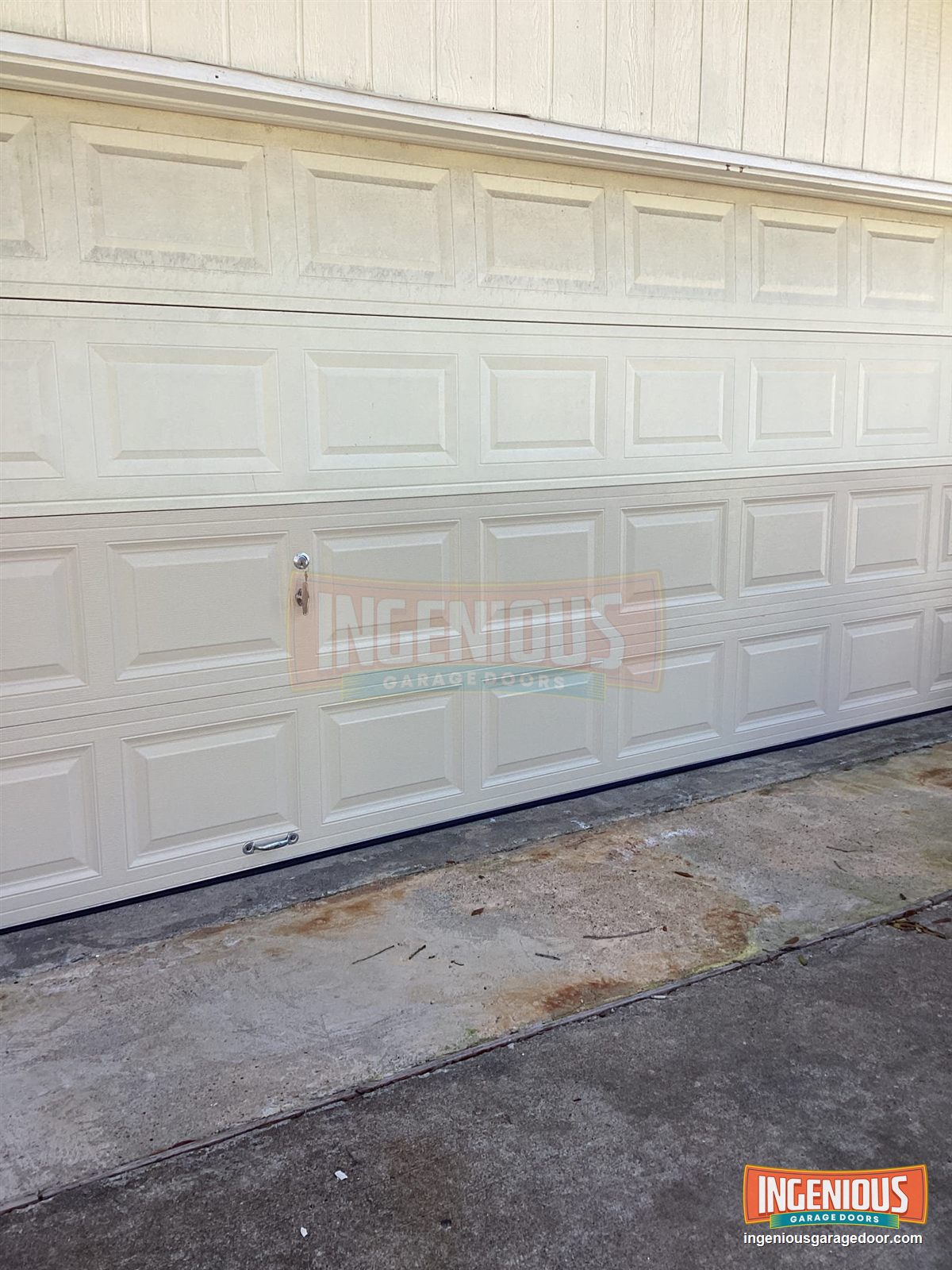
- New bottom and intermediate C.H.I. sections in almond
- A new pair of torsion springs sized to the door
- A full set of nylon rollers
- A new keyed lock with a locking bar, so the garage can be locked from outside again
About matching the color
The new sections came in the same factory almond as the original door. We tell people up front that new sections may not match the old ones exactly, because years of Texas sun fade the paint on the original panels. If a perfect match matters, the door can be painted after the repair.
If your door is cracking at the bottom
- Check the springs first. If the door is heavy or will not stay halfway open, the springs are the cause and the cracks will keep spreading.
- Lift with the handle, straight up, instead of heaving on the bottom edge.
- If daylight shows through a seam, the section is failing. Call before it folds, especially if your car is inside.
We fix doors like this all over Sugar Land and Fort Bend County. Call (713) 324-8950 or see our Sugar Land garage door repair page. Spring prices are in our spring replacement cost guide.
Frequently Asked Questions
Why are the bottom panels of my garage door cracking?
Most often the springs are worn. When they stop carrying the weight, the bottom sections take the strain every time the door is lifted, and the steel cracks along the seams over time.
Can you replace just the damaged sections?
Yes, if the rest of the door is in good shape. On this job only the bottom two sections were replaced, along with the springs, rollers and lock.
Will new sections match my old door?
They come in the same factory color, but older panels fade in the sun, so the match may not be perfect. The door can be painted afterward if you want an exact match.
My door has no opener. Does it still need springs?
Yes. Springs do the lifting on every garage door, manual or automatic. Without good springs, a manual door is heavy and dangerous to lift.