Lubricating a garage door takes about 15 minutes, and twice a year is enough for most homes. Use a silicone spray or white lithium grease on the hinges, the roller bearings, the springs and the bearings at the ends of the spring shaft. Don't grease the tracks. Wipe them clean instead. It's the easiest piece of garage door maintenance you can do yourself, and it cuts down on noise and wear.
How to lubricate a garage door, the short version
- Close the door and unplug the opener.
- Wipe the tracks clean with a damp cloth. No lubricant goes in the tracks.
- Spray each hinge where the pin pivots.
- Spray the roller bearings, not the nylon wheels.
- Give the springs and the spring-shaft bearings a light, even coat.
- Plug the opener back in and run the door up and down a few times.
When the moving parts are dry, metal grinds on metal and everything wears faster. Houston's heat and humidity add rust to the mix, because bare steel corrodes quickly here when nothing is protecting it.
What lubrication does for the door
Every time the door moves, the hinges pivot, the rollers spin and the springs wind and unwind. A door that opens a few times a day goes through a lot of cycles in a year, and dry parts lose a little more with each one. That's where the squeak comes from.
Parts that need lubricant
These are the parts to hit:
- The hinges where the door sections meet
- The bearings inside the rollers
- The torsion spring above the door, or the extension springs along each side
- The bearing plates at each end of the torsion shaft, plus the center bearing if there is one
A lot of people put the tracks on this list. They don't belong there, as you'll see in the steps below.
The roller bearings get the most work. They spin every time the door moves, so if you only had time for one thing, it would be those.
What you'll notice afterward
The first thing is less noise. The lubricant also leaves a film on bare metal that slows down rust, which matters in a humid climate like ours.
The door should run smoother too, without jerking or catching at the same spot every time. That takes strain off the opener motor and the springs, which helps both last longer.
What you'll need
Skip regular WD-40 and general-purpose oils. Classic WD-40 is mostly a cleaner and water displacer. It doesn't leave much lasting lubricant behind, and oily residue collects dust and grit. You want a lubricant made for this kind of job.
Lubricants that work
Silicone spray works well on most garage door parts. It doesn't attract much dirt and it holds up through Houston's temperature swings. White lithium grease is the other good option. It's thicker and stays put longer, which is why a lot of techs like it on roller bearings and hinges, and some people use it on springs as well. The cans labeled "garage door lubricant" at the hardware store are usually one of these two.
Don't use any of these on a garage door:
- Regular WD-40 (it's a solvent and water displacer, not a long-lasting lubricant)
- Motor oil or cooking oil
- Heavy automotive grease
- Anything that leaves a sticky film that catches dust
Tools and supplies
You don't need much:
- A can of silicone spray or white lithium grease, ideally with a straw nozzle
- Clean rags or old towels
- A step ladder for the springs and top corners
- Work gloves
- A damp cloth for the tracks
That's it. Once you have the right can, the job is simple.
Step-by-step lubrication guide
Start with the door fully closed. Everything is easier to reach that way, and the door can't come down on you.
- Unplug the opener so nobody can run the door while your hands are near it. You can use the red emergency release cord instead, but only pull it with the door fully closed. Never pull it with the door open, or if a spring or cable looks broken, because the door can drop.
- Wipe the inside of both tracks with a damp cloth to get out dirt, leaves and old gunk. Don't spray lubricant into the tracks.
- Look things over while you clean. Watch for worn or wobbly rollers, loose hinges and frayed cables.
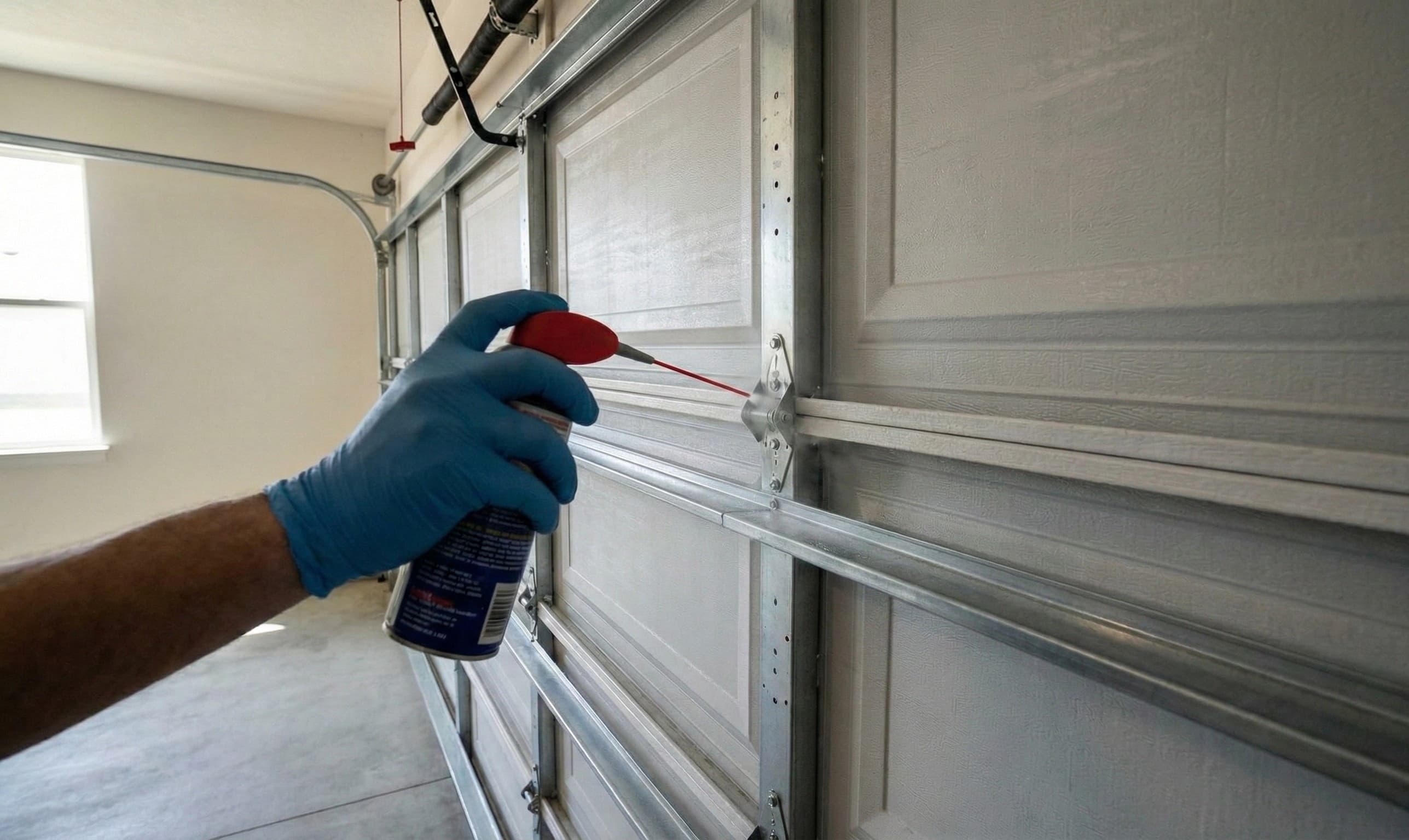
- Spray each hinge at the pivot point where the pin goes through. There's a row of hinges at every joint between sections, so you'll do several per row.
- Spray the roller bearings. On nylon rollers, aim at the bearing in the center and keep spray off the nylon wheel. On steel rollers, spray where the shaft goes into the roller.
- Coat the springs with a light, even spray from a few angles. A torsion spring sits on the shaft above the door, and extension springs run along the upper tracks on each side. Spray from the ladder and keep your hands off the springs and cables. They carry the weight of the door and are under a lot of tension.
- Spray the bearing plates at the top corners where the torsion shaft ends, the center bearing if your door has one, and the top rollers at each corner. Those spots take a lot of stress and are easy to forget.
- Plug the opener back in and run the door up and down three or four times to work the lubricant in. If you used the release cord, run the opener once and the trolley will latch back onto the door.
- Listen while it runs. If something still squeaks, you probably missed a hinge or a roller.
- Wipe drips off the door and the floor. Extra lubricant just collects dirt.
When to call a professional
If the door is still loud or stiff after a good lube job, the problem is wear or damage, not dryness, and you may need garage door repair.
Signs you need help
- The door still squeaks or grinds after you've done every part.
- The springs are rusty or there's a gap between coils. Here's what new springs cost.
- Rollers are cracked, chipped or wobble in the track.
- The door binds or sticks even with fresh lubricant.
- Cables are frayed or riding off the drums or pulleys.
Don't try to adjust or repair springs yourself. They're under heavy tension and can cause serious injuries. Leave spring replacement to a technician.
On an older door that's still noisy after lubrication, worn rollers and hinges are the usual cause. No spray fixes those. They need to be replaced.
Still noisy after you've lubricated it?
If you've done every hinge and roller and the door still grinds, binds or sounds rough, call us at (713) 324-8950. On a tune-up visit we lubricate the door, check and adjust the balance, tighten the hardware, test the auto-reverse and photo eyes, and look over the rollers, cables and springs. If a part needs replacing, you get the price before we touch it.
Frequently Asked Questions
How often should I lubricate my garage door?
Twice a year works for most homes. If you're close to the coast or your garage stays damp, every three months isn't overkill. Houston's humidity speeds up rust on bare metal, so don't let it go much longer than six months.
Can I use WD-40 to lubricate my garage door?
Regular WD-40 isn't a good choice. It's a solvent and water displacer that cleans and loosens rust, but it doesn't leave lasting lubrication behind. Use a silicone spray or white lithium grease instead.
Should I lubricate the garage door tracks?
No. Wipe the tracks clean with a damp cloth and leave them dry. Lubricant in the tracks catches dirt and grit, and the door ends up running worse. The rollers need lubricant, not the tracks they ride in.
Why is my garage door still noisy after lubricating it?
Usually it's worn rollers, loose hardware or damaged hinges. Sometimes the noise is coming from the opener, like a chain or belt that needs adjusting. If you can't find the source, a technician can track it down.
What's the difference between silicone and lithium lubricant?
Silicone spray is thinner and easier to get into tight spots. White lithium grease is thicker and stays in place longer, which makes it a good fit for high-stress parts like roller bearings. Both work fine on garage doors, so it mostly comes down to preference.
Do I need to lubricate a new garage door?
Yes. New doors come with some lubricant from the factory, but it wears off with use. Put the door on the same twice-a-year schedule from the start.
Can lubrication fix a garage door that won't open?
No. A door that won't open at all usually has a broken spring, a loose or broken cable, or an opener problem. Lubrication helps with noise and smooth movement. It won't fix a mechanical failure.